

 To introduce a new blog series on climate risk, the IFoA’s Life Climate Change Working Party explores the concepts of ‘black swans’ and ‘gray rhinos’ in a climate context.
The end of the 17th century saw remarkable developments in all areas of insurance. The 1666 Great Fire of London was a catalyst for property insurance and led to the establishment of the world’s oldest insurance company, the Hamburg Fire Office, in 1676.
The opening of Lloyd’s coffee house in 1688 marked the beginning of modern marine insurance. Edmond Halley published the first age-specific actuarial life table in 1693. The world’s second oldest insurance company, Hand in Hand (now Aviva), was founded in London in November 1696. These developments provided a financially sound basis for pricing and reserving in insurance.
Just a couple of days into 1697, on the other side of the world, another notable event took place. The Dutch explorer Willem de Vlamingh sighted black swans on the West Coast of Australia near modern day Perth.
Until this time, all swans were believed to be white. No one had even considered the possibility of black swans. In 2007, Nassim Nicholas Taleb popularised the term ‘black swan’ in financial markets, defining it as an unpredictable event with extreme impact that seems to have been predictable with hindsight.
Not so long ago, many climate events that are commonplace today might have been considered black swans outside the realm of possibilities. Regrettably, heatwaves, floods and droughts have become a commonplace hazard in many parts of the world to the extent that they are now ‘white swans’ and generally expected.
In other words, black swans are increasingly turning white – the extreme outlier has become the regularly recurring, usual or expected. But the question for actuaries is whether we have adjusted to this new reality? Is there a risk that, as life actuaries, we consider climate change to be something that only impacts our general insurance colleagues, leaving us safely outside the high impact zone?
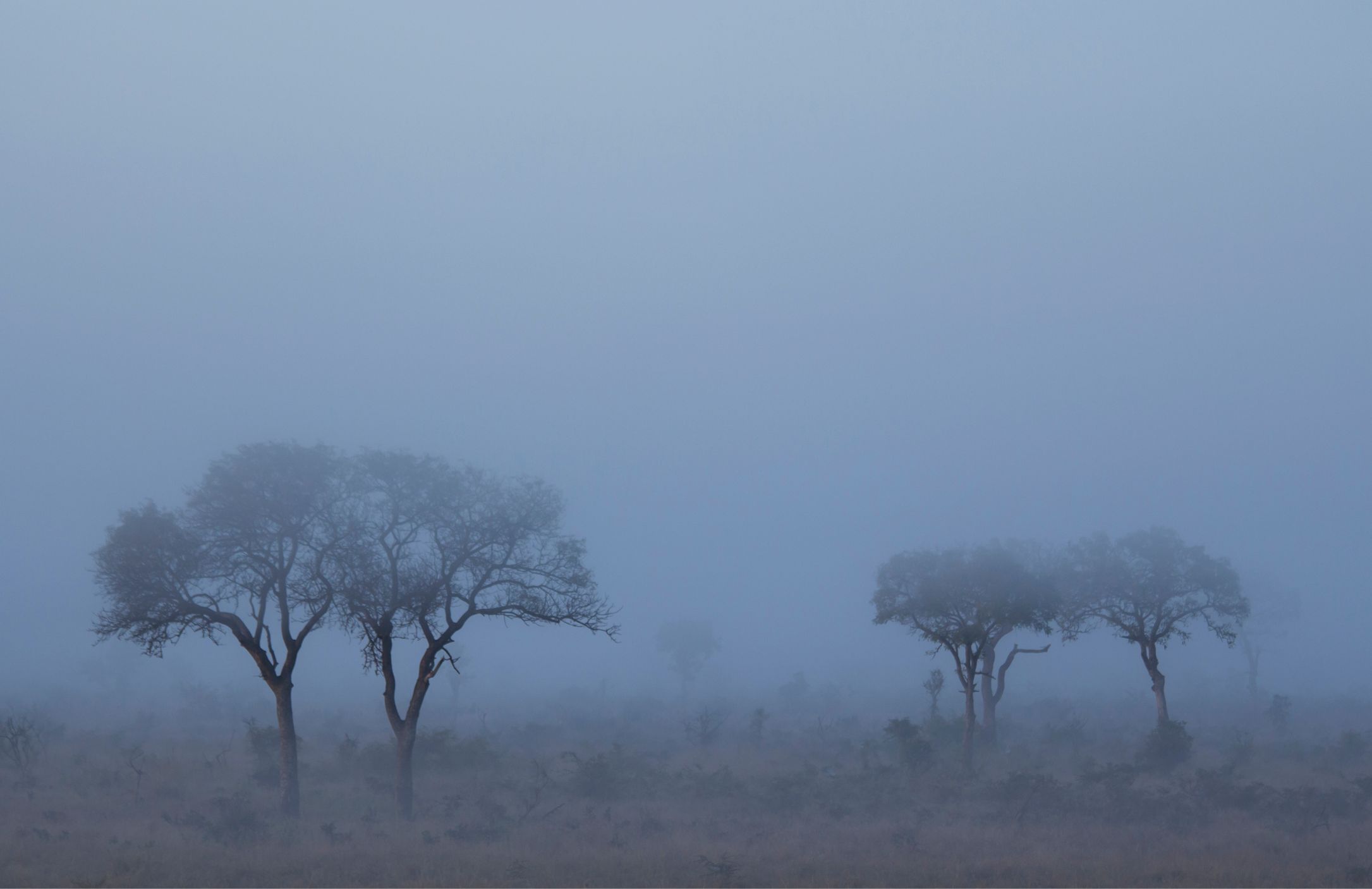
Such an approach risks bringing a new animal into view: a ‘gray rhino’. Coined by author Michele Wucker, gray rhinos are highly probable, high-impact threats that are often overlooked. Imagine walking through a foggy morning in the savannah – you could spot a rhino if you were actively looking. But if you are not paying attention, you might not notice it until it crashes into you, leaving no time to react.
We believe that risk management practices should change with the changing nature of climate risks. To consider climate change risk as something remote, a qualitative narrative in the ORSA (own risk and solvency assessment), risks that it is a much more immediate probability and high impact in potential (gray rhino).
Today, some regulators require quantitative use of climate scenarios not only in the ORSA but in wider decision-making processes. That goes together with at least a qualitative consideration of potential climate change impacts in best-estimate assumptions.
The Prudential Regulation Authority’s recent publication of CP10/25 signals the shifting regulatory focus onto concrete, qualitative and deeply understood climate risk management processes. This would require not only adjusting our best- and risk-margin estimates but resetting our ORSA boundaries to allow for the new black swans.
In this blog series we aim to describe climate related risks along this spectrum. That includes former black swans that are now white and the gray rhinos roaming the actuarial savannah that risk crashing into our work, and our organisations, if we are not paying attention. Equally, we need to remain cognisant of the future potential for black swans.
Climate risks exist on a spectrum of predictability, reflecting society’s level of knowledge of the risk, its ability to measure and model the risk, and the complexity of the underlying system itself.
To reflect these differing degrees of predictability and to retain our zoological analogy, we will need to be able to identify these across the (new) white swans, gray rhinos and the (new) black swans.
We will structure the series along the traditional risk taxonomy as follows:
The impact of climate change on risks 1 and 2 are not in scope of the Life Climate Change Working Party. But we will still include them to emphasise the difference in nature of their sensitivity to climate change compared to life underwriting risks 3 and 4.
For each risk, we will discuss the most relevant climate change impacts on both short and long term, the level of uncertainty and thereby their likely place in the risk management system. We aim to write a separate blog on aggregation as the convolution of the risks can have a profound impact. We will close off the series with a summary.


